Guide
Transformer Monitoring System Guide: Architecture, Sensors and Decisions
A practical guide to transformer monitoring architecture, sensors, condition indicators, alarms, integration and maintenance decisions.

Technical guides for buyers, transformer engineers and maintenance teams covering system selection, installation, monitoring methods and condition-data interpretation.
A practical guide to transformer monitoring architecture, sensors, condition indicators, alarms, integration and maintenance decisions.
Use a buyer-focused checklist to select transformer sensors, channels, protocols, alarms, installation scope and supplier deliverables.
Compare ten transformer parameters commonly monitored online and learn what each signal can and cannot reveal about asset condition.
Review common transformer failure modes, their warning signs and the monitoring evidence used to plan inspection or diagnostic testing.
Compare continuous transformer monitoring with offline diagnostic testing, including coverage, limitations, costs and maintenance decisions.
Plan transformer monitoring installation from drawings and sensor placement through wiring, commissioning, baseline capture and handover.
Plan transformer monitoring SCADA integration with clear protocols, tags, timestamps, alarm ownership, quality flags and diagnostic data boundaries.
Plan transformer monitoring sensor types, locations, channel counts, spare capacity, identifiers and commissioning records before procurement.
Develop transformer monitoring alarm thresholds using baselines, rate of change, persistence, operating context and defined escalation actions.
Evaluate retrofit transformer monitoring options, sensor access, outage needs, interfaces, installation risks and commissioning deliverables.
Understand direct and indirect transformer winding temperature monitoring methods, sensor placement, channel planning, limits and applications.
Compare direct fiber-optic sensing and thermal models for transformer hot-spot temperature measurement, interpretation and project planning.
Compare fiber-optic and RTD transformer temperature sensing by electrical isolation, location, installation stage, accuracy and maintenance access.
Compare UHF, HFCT, acoustic and electrical transformer partial-discharge monitoring methods, interference controls, baselines and limitations.
Learn a cautious workflow for transformer PRPD pattern interpretation using phase relationship, repetition, noise checks and corroborating evidence.
Understand online transformer DGA monitoring, key gases, trend interpretation, sampling quality, alarm logic and laboratory confirmation.
Review key gases used in transformer dissolved gas analysis, their formation context, trend value and limits for condition assessment.
Compare online transformer DGA monitoring and laboratory oil analysis by frequency, gas coverage, quality control, cost and diagnostic role.
Understand transformer oil moisture monitoring, temperature dependence, cellulose equilibrium, trend interpretation and confirmation sampling.
Learn how transformer oil level, tank pressure and oil temperature trends support leakage, cooling and operating-condition review.
Understand online transformer bushing monitoring using capacitance, dielectric loss, leakage current, phase comparison and temperature context.
Review transformer bushing electrical, thermal and visual warning indicators and build a cautious verification and response workflow.
Understand transformer OLTC monitoring through motor current, vibration, operation timing, temperature, contact wear evidence and oil condition.
Learn how OLTC motor-current and vibration signatures are captured, aligned, compared and used to support maintenance investigation.
Build a transformer predictive-maintenance workflow using condition trends, asset criticality, confirmation tests and documented maintenance actions.
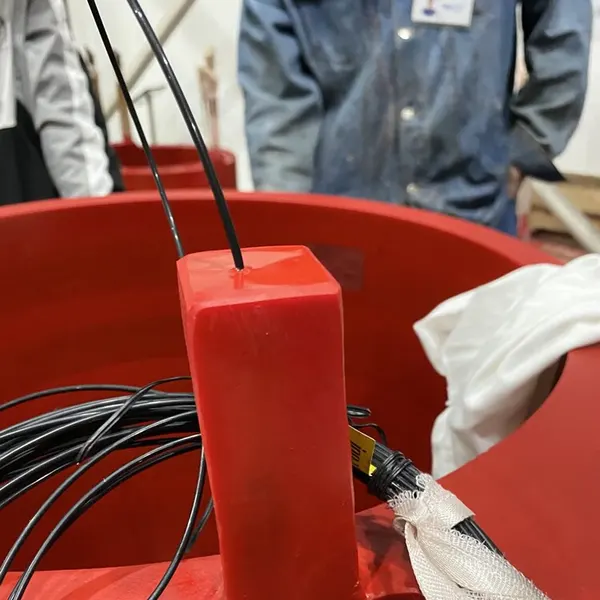
Share the transformer design, measurement points, installation stage and communication requirements. FUZHOUINNO will review a suitable product and monitoring configuration.