1. What Is Transformer DGA Monitoring?
Electrical and thermal faults decompose oil and paper into gases. A laboratory sample can identify those gases, but a fast-developing trend may begin between scheduled samples. This matters to transformer asset engineers, oil laboratories and maintenance planners.
Start by naming the transformer component, the expected fault or operating change, and the decision the measurements must support. The scope for transformer dissolved gas analysis monitoring must remain tied to that purpose.
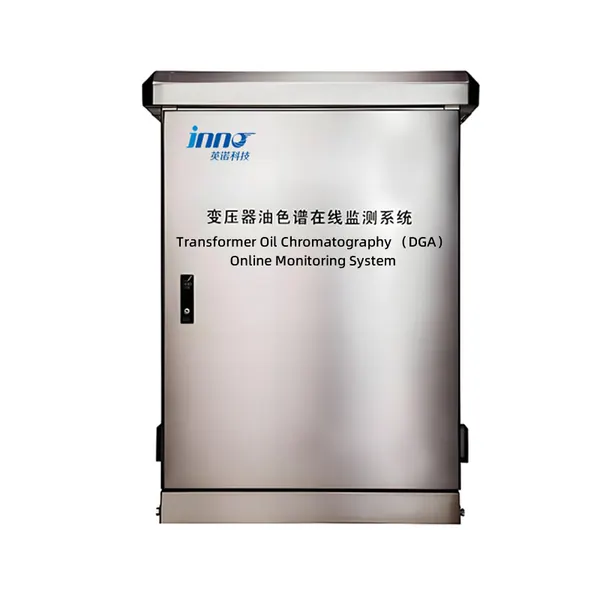
An online DGA monitor circulates representative oil, extracts dissolved gas and measures selected components at a fixed interval. Multi-gas records distinguish hydrogen, hydrocarbons and carbon oxides better than a single total or health color. The measurement path must remain traceable from sensor to alarm.
Useful evidence comes from hydrogen, methane and ethylene. These measurements should help the owner recognize meaningful gas formation and rate-of-change patterns without relying on a single concentration.
A good result is not another dashboard value. It is a clear answer about single-gas versus multi-gas coverage, supported by measurements that the maintenance team can check.
DGA uses the predictable gases produced when transformer oil and cellulose insulation decompose under electrical or thermal stress. The gas type, concentration and rate of increase provide evidence about what may be changing inside an oil-filled transformer.
2. Transformer Faults Detected Through DGA
A multi-gas DGA record separates H₂, CH₄, C₂H₆, C₂H₄, C₂H₂, CO and CO₂ so the engineer can compare gas families and generation rate. TDCG is a useful sum, but it can hide whether the change is dominated by hydrogen, acetylene or cellulose-related gases.
An online DGA monitor circulates representative oil, extracts dissolved gas and measures selected components at a fixed interval. Multi-gas records distinguish hydrogen, hydrocarbons and carbon oxides better than a single total or health color. Record where each value originates and which operating condition can change it.
Gas extraction: separates dissolved gases from oil. Verification point: Extraction method and repeatability. Keep the channel identity, units, timestamp and instrument status with the result.
Ignoring oil handling and sampling quality can make a correct instrument look misleading. Check the measurement method and the transformer state before assigning a fault.
Partial discharge often produces hydrogen, lower-temperature oil heating produces methane and ethane, higher-temperature heating increases ethylene, and high-energy arcing can produce acetylene. Carbon monoxide and carbon dioxide add information about cellulose insulation aging or overheating.
3. Why Online DGA Matters for Transformer Reliability
A multi-gas DGA record separates H₂, CH₄, C₂H₆, C₂H₄, C₂H₂, CO and CO₂ so the engineer can compare gas families and generation rate. TDCG is a useful sum, but it can hide whether the change is dominated by hydrogen, acetylene or cellulose-related gases.
Detection: quantifies single or multiple gases. Verification point: Range, detection limit, cross-sensitivity and calibration. Keep the channel identity, units, timestamp and instrument status with the result.
Review ethylene together with acetylene. Their direction, timing and persistence help separate a transformer change from normal operation or a sensor problem.
For ethylene, document the physical point, range, sampling behavior and expected output. This makes commissioning and later troubleshooting much easier.
A scheduled laboratory sample gives a detailed snapshot but leaves a time gap until the next sample. Online DGA closes part of that gap by repeating the analysis automatically and showing whether a gas is stable, slowly rising or increasing rapidly.
| Measurement stage | Concrete function | Quality check |
|---|---|---|
| Oil loop | Supplies representative oil and returns it safely | Valve, flow, leak and stagnant-pocket review |
| Gas extraction | Separates dissolved gases from oil | Extraction method and repeatability |
| Detection | Quantifies single or multiple gases | Range, detection limit, cross-sensitivity and calibration |
| Interpretation | Calculates trends, TDCG and diagnostic methods | Original concentrations remain visible |
4. Operating Principle of an Online DGA Monitoring System
A multi-gas DGA record separates H₂, CH₄, C₂H₆, C₂H₄, C₂H₂, CO and CO₂ so the engineer can compare gas families and generation rate. TDCG is a useful sum, but it can hide whether the change is dominated by hydrogen, acetylene or cellulose-related gases.
The signal path for acetylene runs from the sensing point through cables, optical leads or an oil loop to the acquisition unit. Local processing stores the record and sends selected values or alarms onward.
Interpretation: calculates trends, TDCG and diagnostic methods. Verification point: Original concentrations remain visible. Keep the channel identity, units, timestamp and instrument status with the result.
Sampling and storage for carbon monoxide must match the physical event. Slow oil movement, a brief OLTC operation and a high-frequency PD pulse need different acquisition settings.
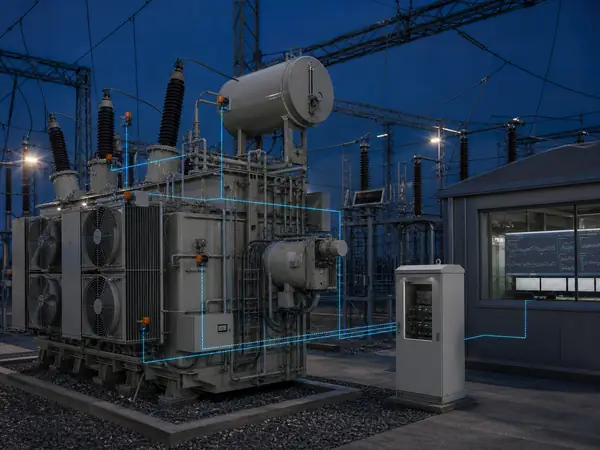
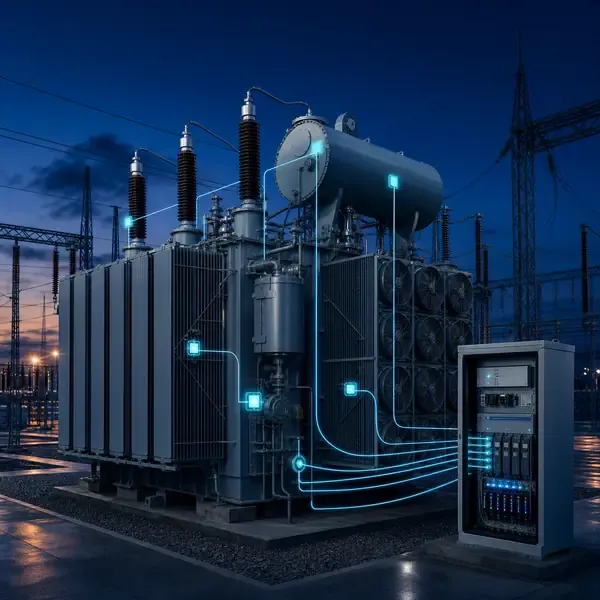
The installed monitor draws representative oil, extracts the dissolved gases, measures selected components, stores the results and sends values or alarms to the monitoring platform. Oil flow, extraction status and analysis-cycle health must remain visible.
Compare available transformer monitoring products and instruments after the sensor locations, channel quantity and required outputs are known.
5. Fault Gases Measured in Transformer Oil
Field example: A new acetylene reading should trigger an instrument check and a repeat cycle, not an automatic fault label. Review companion gases, generation rate, recent oil work and a controlled laboratory sample before deciding the urgency.
Carbon monoxide alone does not explain the result. Carbon dioxide provides the comparison needed to test the first explanation.
Keep individual concentrations, timestamps, analysis status and rate of change visible. Document the oil inlet, return, extraction method, calibration and confirmation-sampling procedure.
This evidence helps determine single-gas versus multi-gas coverage. Depending on severity and confidence, the next step may be continued trending, inspection, a controlled sample or an offline test.
A seven-gas instrument commonly reports hydrogen, methane, ethane, ethylene, acetylene, carbon monoxide and carbon dioxide. The original concentrations should remain available even when the interface also displays TDCG, ratios or a diagnostic zone.
6. Interpreting DGA Results and Gas Trends
A multi-gas DGA record separates H₂, CH₄, C₂H₆, C₂H₄, C₂H₂, CO and CO₂ so the engineer can compare gas families and generation rate. TDCG is a useful sum, but it can hide whether the change is dominated by hydrogen, acetylene or cellulose-related gases.
Review carbon dioxide together with moisture and oil temperature. Their direction, timing and persistence help separate a transformer change from normal operation or a sensor problem.
Gas extraction: separates dissolved gases from oil. Verification point: Extraction method and repeatability. Keep the channel identity, units, timestamp and instrument status with the result.
After sensor replacement, oil processing or a configuration change, mark a new comparison period for carbon dioxide. Otherwise maintenance may look like sudden deterioration or recovery.
Interpretation may use individual-gas trends, generation rate, key-gas methods, IEC ratios and Duval methods. These tools classify evidence; they do not replace confirmation of sampling quality, operating context and recent oil processing.
7. Online DGA Monitor Installation
A multi-gas DGA record separates H₂, CH₄, C₂H₆, C₂H₄, C₂H₂, CO and CO₂ so the engineer can compare gas families and generation rate. TDCG is a useful sum, but it can hide whether the change is dominated by hydrogen, acetylene or cellulose-related gases.
Using ratios outside their valid context is a significant interpretation risk for moisture and oil temperature. Preserve the original reading and compare it with an independent observation before escalating.
Keep individual concentrations, timestamps, analysis status and rate of change visible. Document the oil inlet, return, extraction method, calibration and confirmation-sampling procedure.
This evidence helps determine alarm persistence. Depending on severity and confidence, the next step may be continued trending, inspection, a controlled sample or an offline test.
Installation requires representative inlet and return points, suitable valves and tubing, leak-free connections, auxiliary power, environmental protection and communication. Commissioning should verify oil flow, repeat cycles, timestamps, alarms and a laboratory comparison sample.
- Interpreting one sample without history — check the sensor, operating state and related measurements before assigning a transformer fault.
- Ignoring oil handling and sampling quality — check the sensor, operating state and related measurements before assigning a transformer fault.
- Using ratios outside their valid context — check the sensor, operating state and related measurements before assigning a transformer fault.
- Presenting DGA as a certain fault location — check the sensor, operating state and related measurements before assigning a transformer fault.
8. Combining DGA with Temperature and Partial Discharge Monitoring
A multi-gas DGA record separates H₂, CH₄, C₂H₆, C₂H₄, C₂H₂, CO and CO₂ so the engineer can compare gas families and generation rate. TDCG is a useful sum, but it can hide whether the change is dominated by hydrogen, acetylene or cellulose-related gases.
Presenting DGA as a certain fault location is a significant interpretation risk for hydrogen. Preserve the original reading and compare it with an independent observation before escalating.
Keep individual concentrations, timestamps, analysis status and rate of change visible. Document the oil inlet, return, extraction method, calibration and confirmation-sampling procedure.
This evidence helps determine when laboratory analysis is required. Depending on severity and confidence, the next step may be continued trending, inspection, a controlled sample or an offline test.
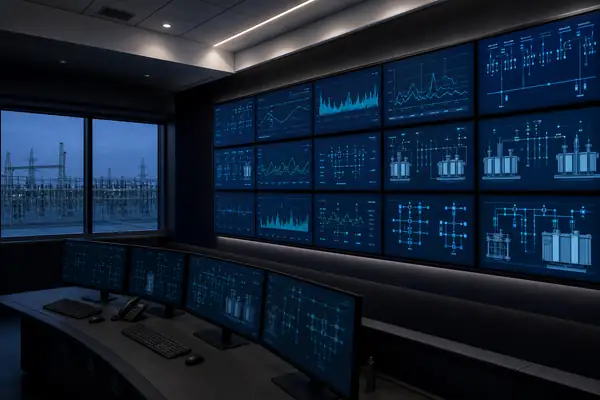
Temperature explains thermal stress and loading context, while partial-discharge monitoring adds direct evidence of electrical pulse activity. Aligning these records by time can strengthen or challenge the first interpretation of a DGA trend.
9. Choosing the Right DGA Monitoring System
Continuous multi-gas monitoring fits critical oil-filled transformers, remote substations and assets with an existing or uncertain gas trend. Start with the transformer, the problem to be detected and the action expected after an alarm. The scope must clarify single-gas versus multi-gas coverage.
For hydrogen, require the exact model, quantity, range, accessories, outputs and communication interface. Optional work should be separated from the base supply.
Split field responsibilities before ordering transformer dissolved gas analysis monitoring. The quotation should assign responsibility for confirm oil inlet and return valves and approval of single-gas versus multi-gas coverage.
The purchase record for transformer dissolved gas analysis monitoring should show what arrives on site and how it will be checked. Do not replace measurable acceptance criteria with a promise to predict every failure.
Continuous multi-gas monitoring is usually reserved for critical oil-filled transformers, units with abnormal gas history, remote sites or assets where a developing fault must be seen between laboratory samples.
Review the related transformer monitoring solution before selecting instruments for hydrogen.
10. DGA Specifications Worth Comparing
Compare extraction and detection technology and analysis interval, range, repeatability and detection limits before comparing price. Two proposals are not equivalent when one includes field sensors, cables, drawings and commissioning while the other lists only the monitor.
The proposal for transformer dissolved gas analysis monitoring should tie methane to a model, measurement point, stated performance basis and included installation parts. This makes price differences explainable.
Installation and testing cannot remain an undefined site task. Assign responsibility for define tubing, isolation, drainage and leak testing and final review of sampling interval.
Approve equipment release only after the bill of materials, channel list, drawings, alarm behavior, tests and documents are complete. Acceptance for methane must demonstrate the specified readings and interfaces.
Compare gas set, measurement range, repeatability, detection capability, analysis interval, extraction method, calibration, carrier-gas needs, oil-loop accessories and instrument self-diagnostics.
| Proposal item | What the buyer should verify | Why it changes the comparison |
|---|---|---|
| Measured gas set and optional moisture | Included model, quantity, performance basis and responsibility | Prevents unlike hardware scopes from appearing equivalent |
| Extraction and detection technology | Drawing, interface, test method and delivered record | Prevents installation and commissioning work from becoming an unpriced change |
| Analysis interval, range, repeatability and detection limits | Included model, quantity, performance basis and responsibility | Prevents unlike hardware scopes from appearing equivalent |
| Calibration, consumables and lifetime service plan | Drawing, interface, test method and delivered record | Prevents installation and commissioning work from becoming an unpriced change |
11. What Project Information Is Needed for a DGA Proposal?
Send the nameplate, general arrangement, installation stage and available drawings with the inquiry. Mark the locations related to hydrogen and methane and identify existing instruments that may be reused.
Ask how the offered equipment handles ethylene: where it is measured, how often it is recorded, which alarm uses it and what appears in the delivered test report.
Assign responsibility for provide carrier gas where the selected gc method requires it, approval of alarm persistence, and final acceptance.
Before production, freeze the options that affect ethylene. The order should list tests, configuration files, documentation language, commissioning records and support responsibilities.
Provide valve size and position, oil-flow information, transformer oil volume, environmental limits, auxiliary power, communication protocol and the laboratory confirmation procedure planned for an alarm.
- Measured gas set and optional moisture
- Extraction and detection technology
- Analysis interval, range, repeatability and detection limits
- Calibration, consumables and lifetime service plan
- Transformer details relevant to hydrogen, methane and ethylene
- Approved channel list, interfaces, tests and documentation