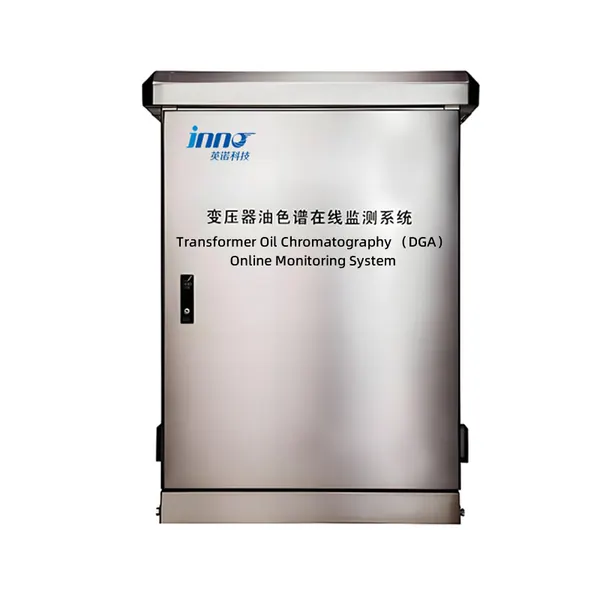
transformer dga monitoring system
Transformer Oil Chromatography Online Monitoring System
Automated oil sampling, gas separation and chromatographic analysis for transformer diagnostics.

Online transformer dissolved gas analysis for fault-gas trends, rate-of-change alarms and condition-based oil sampling.
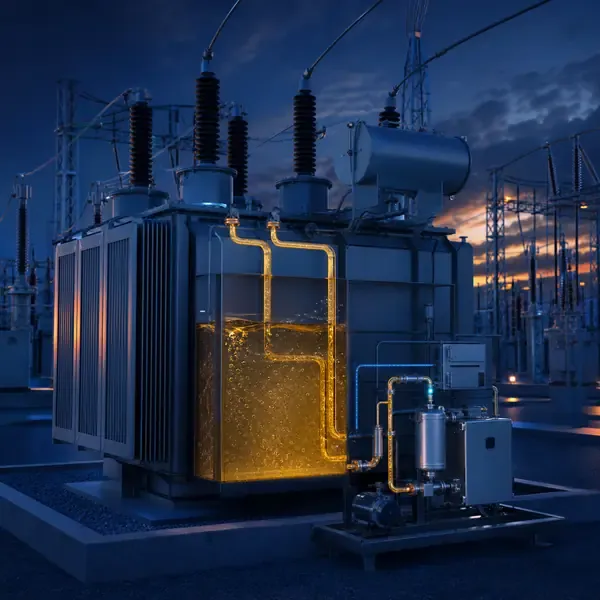
Compare available sensors and instruments that can support this project scope.
Automated oil sampling, gas separation and chromatographic analysis for transformer diagnostics.
online dissolved gas analysis
Dissolved gas analysis measures gases formed when mineral oil or cellulose insulation is exposed to electrical or thermal stress. A multi-gas monitor does not “see” a fault directly; it extracts a repeatable oil sample, separates target gases and reports their concentration and rate of change.
A practical 7-gas scope includes hydrogen (H₂), methane (CH₄), ethane (C₂H₆), ethylene (C₂H₄), acetylene (C₂H₂), carbon monoxide (CO) and carbon dioxide (CO₂). TDCG is calculated from the combustible gases, while oil temperature and transformer load provide essential operating context.
| Gas | Primary engineering association | Interpretation caution |
|---|---|---|
| H₂ | Partial discharge and low-energy electrical activity | Also appears in several other fault processes; trend and companion gases matter |
| CH₄ / C₂H₆ | Lower-temperature oil heating | Absolute level alone does not establish the hot location |
| C₂H₄ | Higher-temperature oil heating | Compare with load, cooling state and other hydrocarbons |
| C₂H₂ | Arcing or high-energy discharge evidence | Confirm sampling, instrument health and rate of generation promptly |
| CO / CO₂ | Cellulose insulation involvement and aging context | Oil preservation system, age and historical treatment affect interpretation |
The field cycle has four physical stages: representative oil circulation, gas extraction, gas separation or detection, and calculation. For a chromatography-based monitor, the extracted mixture passes through a separation column before individual gases are quantified. The instrument then stores the result, calculates trends and transmits selected values.
The oil inlet and return arrangement must avoid a stagnant pocket and must not introduce air or create an unsafe leak path. Tubing length, valve condition, oil temperature, extraction efficiency, carrier-gas condition and the configured analysis interval all influence the quality and availability of the result.
Gas chromatography separates gas components before quantification and can provide a stored chromatographic record. It is appropriate when individual hydrocarbon discrimination and comparison with laboratory GC results are important. The design may require carrier gas and scheduled attention to columns, pumps and calibration materials.
Photoacoustic systems use optical absorption and acoustic response. They can reduce consumable requirements, but gas cross-sensitivity, compensation method and achievable detection limits must be reviewed for the gases that drive the owner’s decision. Technology should be selected from verified channel performance and maintenance burden, not from a one-line “maintenance free” claim.
| Selection factor | GC-based monitor | Photoacoustic monitor |
|---|---|---|
| Gas discrimination | Components are separated before detection | Depends on optical bands and compensation |
| Consumables | Carrier gas may be required | Often no carrier-gas cylinder |
| Evidence retained | Chromatogram may be available | Concentration and instrument diagnostic records |
| Buyer check | Column, detector, extraction and carrier-gas service | Cross-sensitivity, source aging and calibration method |
Key Gas, IEC ratio methods, Rogers Ratio and Duval Triangle are interpretation tools, not independent measurements. Each transforms the same gas results in a different way. Agreement between methods can strengthen a hypothesis, but disagreement is not automatically an instrument failure.
Ratio methods become unstable when one or both denominator gases are near the method’s detection limit. Duval methods require the specified gas set and should be applied within their intended scope. A responsible display keeps original concentrations, rates and timestamps visible behind any diagnostic label.
Review the available transformer DGA monitoring system together with its measured gas set, analysis interval and communication options.
TDCG summarizes combustible gases, but a stable high historical level and a fast new rise are different maintenance situations. Alarm logic should evaluate individual gases, TDCG, rate of generation, persistence, recent oil work and transformer operating state.
Published IEC and IEEE guidance provides interpretation frameworks, not a universal automatic trip setting for every transformer. The owner should approve advisory, warning and escalation rules using transformer type, age, oil volume, historical baseline, criticality and a defined laboratory confirmation procedure.
Permanent online monitoring is strongest where the transformer is critical, remote or known to have an evolving gas trend. A portable analyzer supports fleet screening and faster field checks. A qualified laboratory provides controlled multi-gas analysis and can perform complementary oil-quality tests.
These methods should be designed as a confirmation chain. An online deviation can trigger review of instrument diagnostics, repeat cycles and a carefully collected laboratory sample. Disagreement should lead to checks of sampling point, timing, method uncertainty, calibration and recent oil handling before a fault conclusion is changed.
| Method | Best use | Main limitation |
|---|---|---|
| Online multi-gas monitor | Continuous trend and remote warning on critical assets | Permanent installation and scheduled instrument maintenance |
| Portable analyzer | Field screening across a fleet | Discrete visits and operator-dependent sampling |
| Laboratory DGA | Controlled confirmation and broader oil analysis | Delay between sampling, transport and result |
Installation documentation should define oil valves, flow direction, tubing material and length, monitor mounting, drainage containment, auxiliary power, grounding, carrier gas if used, environmental limits and safe service clearance. The oil loop must be flushed and leak-tested according to the approved procedure.
Commissioning should compare realistic gas values with a qualified reference, verify timestamps and units, simulate concentration and device-fault alarms, test loss of communication, and record the first stable baseline. The acceptance record should also state the expected analysis cycle and all maintenance consumables.
A comparable request for quotation identifies the transformer rating and oil system, required gas channels, measurement ranges, detection limits, stated accuracy basis, repeatability, minimum analysis interval, extraction method, detection technology, environmental rating and local data storage.
It should also define oil connection responsibility, power, protocol, tag list, time synchronization, alarm ownership, commissioning tests, calibration method, carrier-gas arrangement, replacement intervals, remote support boundary and required drawings. Model-specific claims must be confirmed in the approved product specification.
The final scope depends on transformer design and project objectives. It normally combines selected sensors, field acquisition, alarms, communications and an engineering response process.
Retrofit feasibility depends on sensor access and outage constraints. External measurements are usually easier to retrofit than winding sensors installed inside the active part.
Yes when the selected field equipment supports the required interface. The protocol, tag list, network responsibility and acceptance tests must be defined.
No. Online trends reduce information gaps, while offline tests, oil samples and inspections remain important confirmation tools.
Provide transformer drawings and ratings, installation stage, required measurements, communication architecture, alarm philosophy and project quantity.
Monitoring guidance is provided for project scoping. Final sensor placement, alarm settings, interfaces and diagnostic actions depend on transformer design and owner procedures.
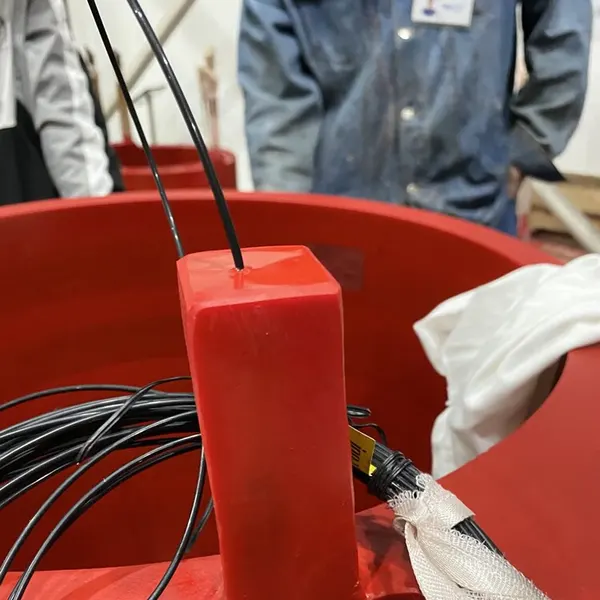
Share the transformer design, measurement points, installation stage and communication requirements. FUZHOUINNO will review a suitable product and monitoring configuration.