
From field signals to operator action
Transformer Remote Monitoring and SCADA Integration
Connect transformer monitoring instruments to SCADA with deliberate protocol, tag, alarm, timing and data-ownership design.
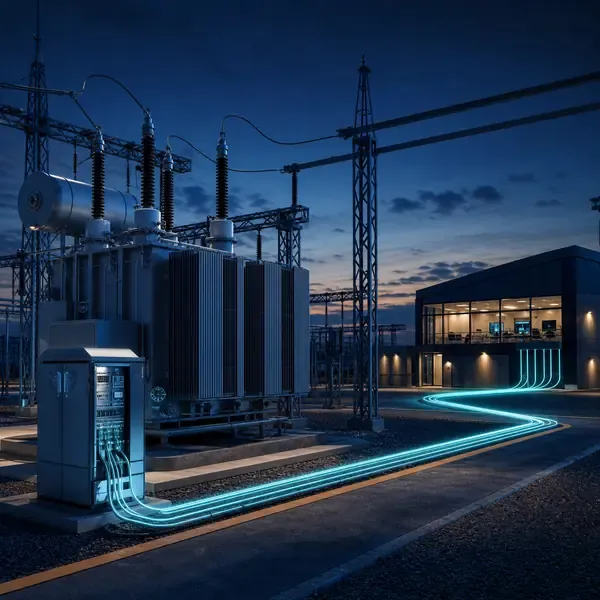
Monitoring scope
Transformer Parameters and Decision Inputs
- Remote measurements
- Alarm and device status
- Communication quality
- Time and event records
Why Is Transformer Remote Monitoring and SCADA Integration Needed?
remote transformer monitoring system
A monitor can work locally yet deliver unusable values to SCADA because of wrong scaling, stale timestamps, missing quality flags or an undefined communication-loss state.
The interface maps selected measurements and alarms through an approved protocol and tag list. Detailed records remain in the field monitor while SCADA receives values that operators can act on.
What Does the System Measure?
Field instruments first acquire and validate sensor signals. Remote integration should not bypass local diagnostics or obscure device-health information.
Remote integration publishes verified field values and status through an approved protocol and data model. It does not replace local diagnostic storage or make protocol support alone equivalent to a commissioned interface.
| Interface item | Define before configuration | Acceptance test |
|---|---|---|
| Protocol / transport | Modbus, IEC 61850, DNP3 or owner-approved method | Stable connection and reconnect |
| Tag model | Name, units, scaling, quality and description | Point-to-point value check |
| Time | Clock source and event timestamp location | Known event time comparison |
| Alarm | Priority, persistence, acknowledgment and owner | Simulated event and communication loss |
How Does the Equipment Work in the Field?
RS485, Ethernet, serial gateways or supported station protocols connect field units to the owner’s network. Network boundaries and cybersecurity responsibilities are documented.
The interface maps selected measurements and alarms through an approved protocol and tag list. Detailed records remain in the field monitor while SCADA receives values that operators can act on.
What Can an Abnormal Trend Look Like?
If a Modbus register freezes after a network interruption, SCADA must show bad or stale quality rather than a healthy last value. Reconnection testing should prove how timestamps and missed alarms are recovered.
Approve units, scaling, data type, timestamp source, quality behavior and alarm priority for every tag. Test the complete path from field input to control-room display.
How Is the System Installed and Commissioned?
Buyers should supply network drawings, protocol requirements, addressing rules, cybersecurity constraints, tag standards and the responsible SCADA integrator.
Commissioning should prove each channel with a realistic input, confirm the channel name and units, simulate alarms and record the first usable baseline.
- Freeze the approved register or tag list
- Separate diagnostic network access from operator displays
- Test stale data and bad-quality flags
- Back up gateway and field-device configuration
How Are Alarms and SCADA Data Used?
SCADA receives prioritized actionable alarms rather than every internal event. Communication loss, stale data and sensor failure are represented separately from transformer condition.
The design defines protocol, register or data model, tag names, engineering units, scaling, quality flags, polling, time synchronization, retention and acceptance tests.
Which Transformer Projects Are a Good Fit?
Required for remote substations, renewable plants, industrial sites and any project where transformer alarms must enter an existing control system.
Protocol support alone does not guarantee successful integration. Configuration, testing, ownership and long-term change control determine reliability.
What Should Buyers Confirm Before Ordering?
Compare proposals line by line. Confirm the included sensors, cables, field equipment, software, drawings, commissioning work and communication interface instead of comparing only the monitoring host.
- Network drawing and cybersecurity boundary
- Protocol profile and exact point list
- Timestamp and quality-flag behavior
- Integrator responsibilities and site acceptance tests
Transformer Monitoring Procurement Checklist
- Transformer type, rating and voltage class
- Priority failure modes and monitored points
- New-build or retrofit installation stage
- Required channels, alarms and communication protocols
- Drawings, cabinet, power and environmental requirements
Transformer Remote Monitoring and SCADA Integration Frequently Asked Questions
What is included in a transformer remote monitoring and scada integration?
The final scope depends on transformer design and project objectives. It normally combines selected sensors, field acquisition, alarms, communications and an engineering response process.
Can this solution be installed on an existing transformer?
Retrofit feasibility depends on sensor access and outage constraints. External measurements are usually easier to retrofit than winding sensors installed inside the active part.
Can the system connect to SCADA?
Yes when the selected field equipment supports the required interface. The protocol, tag list, network responsibility and acceptance tests must be defined.
Does online monitoring replace offline testing?
No. Online trends reduce information gaps, while offline tests, oil samples and inspections remain important confirmation tools.
What should be provided for a technical proposal?
Provide transformer drawings and ratings, installation stage, required measurements, communication architecture, alarm philosophy and project quantity.
Related Products, Applications and Guides
- Transformer monitoring products
- Relevant transformer monitoring application
- Transformer monitoring technical guides
- All transformer monitoring solutions
- Integrated transformer monitoring system
Monitoring guidance is provided for project scoping. Final sensor placement, alarm settings, interfaces and diagnostic actions depend on transformer design and owner procedures.
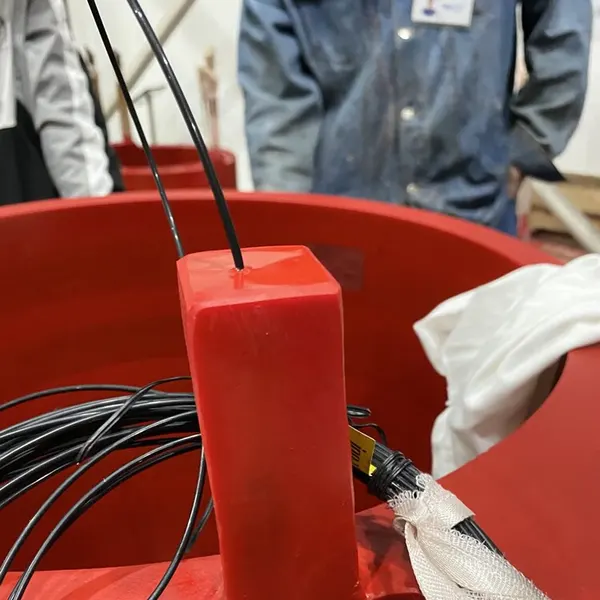
Project-ready supportProduct selectionSensors and instruments matched to the required measurement. System integrationChannels, alarms and communication interfaces defined for the project. Technical documentsSpecifications and available order documentation confirmed before supply.
Transformer monitoring built around your equipment
Share the transformer design, measurement points, installation stage and communication requirements. FUZHOUINNO will review a suitable product and monitoring configuration.
Start a technical discussion