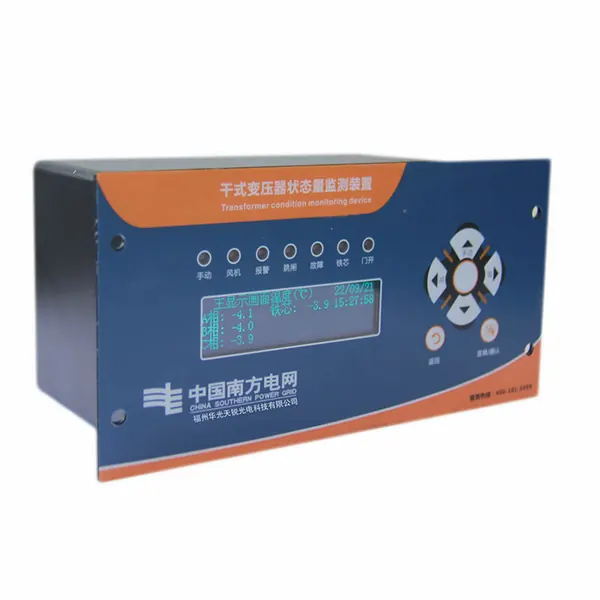
transformer online monitoring system
Dry-Type Transformer State Monitoring Device
Integrated dry-type transformer temperature, load and operating-status monitoring for condition-based maintenance.

Use transformer condition trends, operating context and maintenance history to prioritize evidence-based maintenance actions.
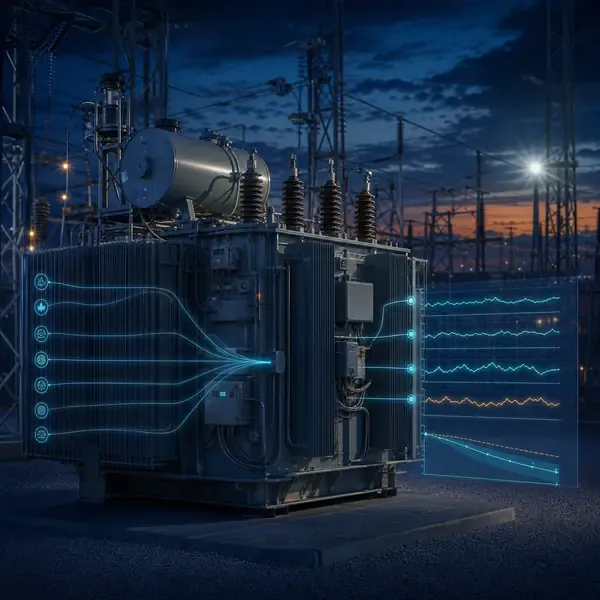
Compare available sensors and instruments that can support this project scope.
Integrated dry-type transformer temperature, load and operating-status monitoring for condition-based maintenance.
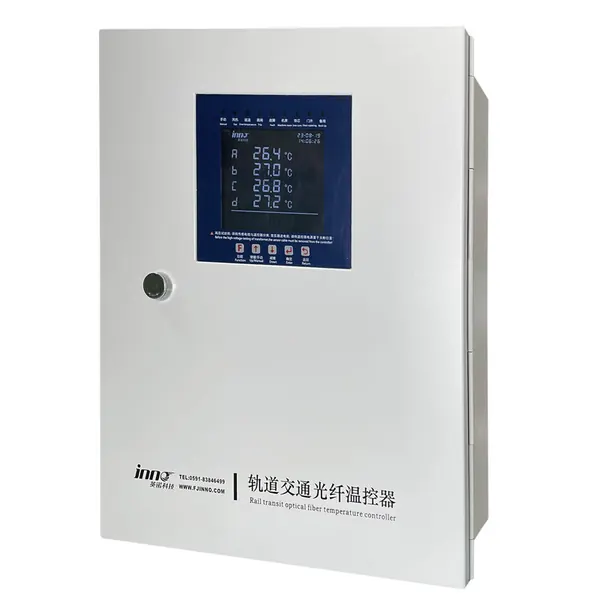
Transformer winding temperature monitoring configured for rail power and traction environments.
transformer predictive maintenance
Calendar maintenance can service a healthy transformer too early and miss a rapidly developing defect between intervals. A prediction label is not useful unless the evidence and next action are visible.
Predictive maintenance combines verified trends, operating exposure, inspection history and asset consequence. It recommends the next check or test; it does not promise an exact failure date.
Predictive maintenance uses measurements already justified by failure modes. Adding sensors without a response process increases data volume but not necessarily decision quality.
Predictive maintenance combines verified condition trends, operating exposure, test history and asset consequence to recommend the next inspection or test. It should report evidence and uncertainty rather than promise an exact failure date.
| Decision horizon | Useful evidence | Typical action |
|---|---|---|
| Immediate | Fast gas, discharge, pressure or thermal escalation | Verify data and apply emergency procedure |
| Near term | Persistent adverse trend with corroboration | Plan targeted inspection or diagnostic test |
| Planned outage | Slow deterioration or repeated abnormal operation | Add work scope and parts preparation |
| Fleet planning | Comparable condition and consequence data | Prioritize capital and maintenance resources |
Data from field monitors, SCADA, laboratory tests and maintenance records is organized around assets and subsystems. Rules and models retain traceable source inputs.
Predictive maintenance combines verified trends, operating exposure, inspection history and asset consequence. It recommends the next check or test; it does not promise an exact failure date.
A slow moisture rise may justify a planned sample at the next visit. A rapid gas increase on a critical transformer may justify immediate confirmation. The same numeric change can therefore lead to different schedules when consequence and rate differ.
Record whether each recommendation was confirmed, dismissed or corrected by maintenance. That feedback improves alarm settings and exposes sensors or rules that create repeated false findings.
The owner defines decision horizons, criticality, acceptable risk, data quality, review responsibility, confirmation tests and measures of program effectiveness.
Commissioning should prove each channel with a realistic input, confirm the channel name and units, simulate alarms and record the first usable baseline.
Immediate operational alarms remain separate from longer-term maintenance recommendations. Recommendations state evidence, confidence, urgency and the confirming action.
Asset-management workflows receive prioritized findings and linked evidence. Work orders and completed maintenance feed back into the condition history.
Best for fleets with reliable history, clear maintenance ownership and enough asset criticality difference to support risk-based prioritization.
No model can guarantee remaining life or predict every failure. Predictive maintenance supports engineering judgment and must be updated as new evidence becomes available.
Compare proposals line by line. Confirm the included sensors, cables, field equipment, software, drawings, commissioning work and communication interface instead of comparing only the monitoring host.
The final scope depends on transformer design and project objectives. It normally combines selected sensors, field acquisition, alarms, communications and an engineering response process.
Retrofit feasibility depends on sensor access and outage constraints. External measurements are usually easier to retrofit than winding sensors installed inside the active part.
Yes when the selected field equipment supports the required interface. The protocol, tag list, network responsibility and acceptance tests must be defined.
No. Online trends reduce information gaps, while offline tests, oil samples and inspections remain important confirmation tools.
Provide transformer drawings and ratings, installation stage, required measurements, communication architecture, alarm philosophy and project quantity.
Monitoring guidance is provided for project scoping. Final sensor placement, alarm settings, interfaces and diagnostic actions depend on transformer design and owner procedures.
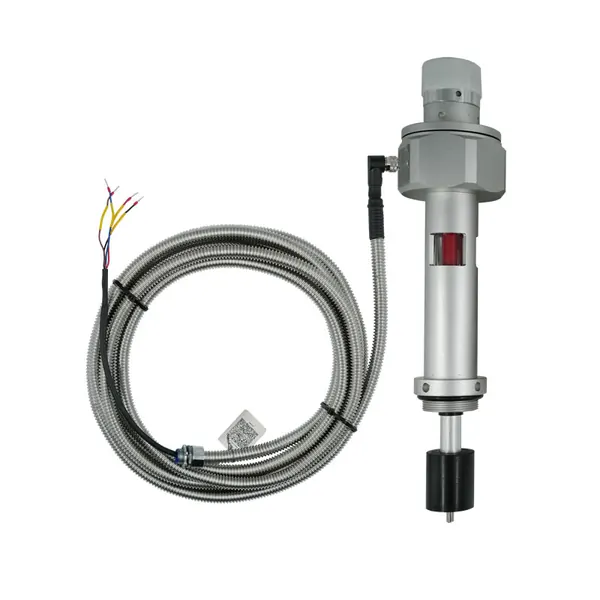
Share the transformer design, measurement points, installation stage and communication requirements. FUZHOUINNO will review a suitable product and monitoring configuration.