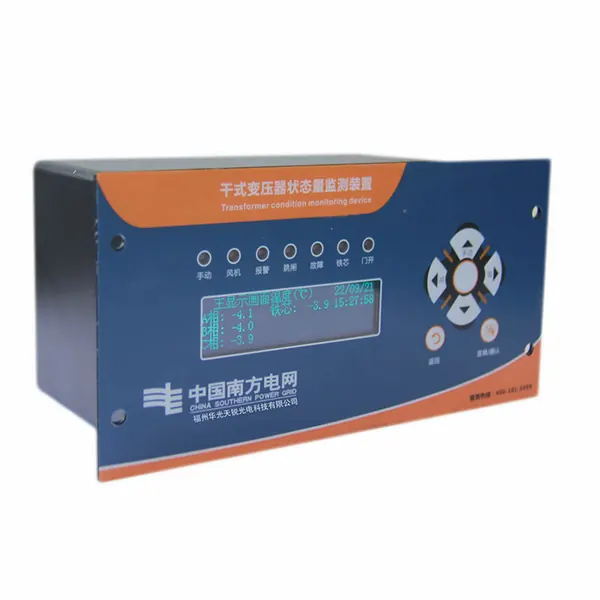
transformer online monitoring system
Dry-Type Transformer State Monitoring Device
Integrated dry-type transformer temperature, load and operating-status monitoring for condition-based maintenance.

Design transformer fault detection around credible symptoms, persistent alarms, corroborating measurements and defined response actions.
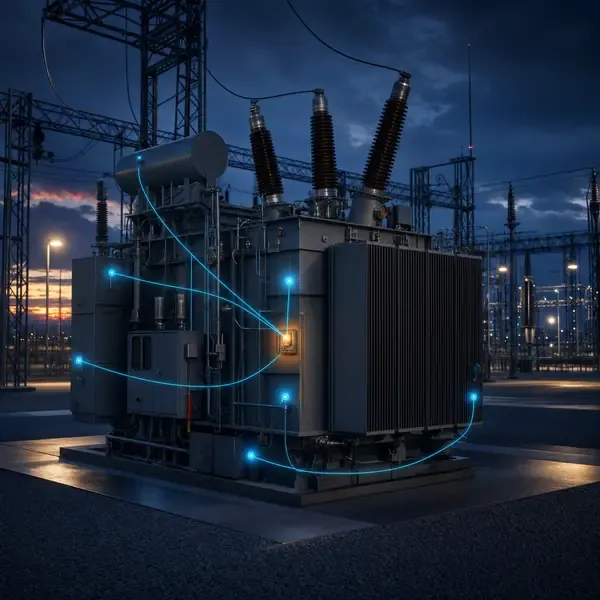
Compare available sensors and instruments that can support this project scope.
Integrated dry-type transformer temperature, load and operating-status monitoring for condition-based maintenance.
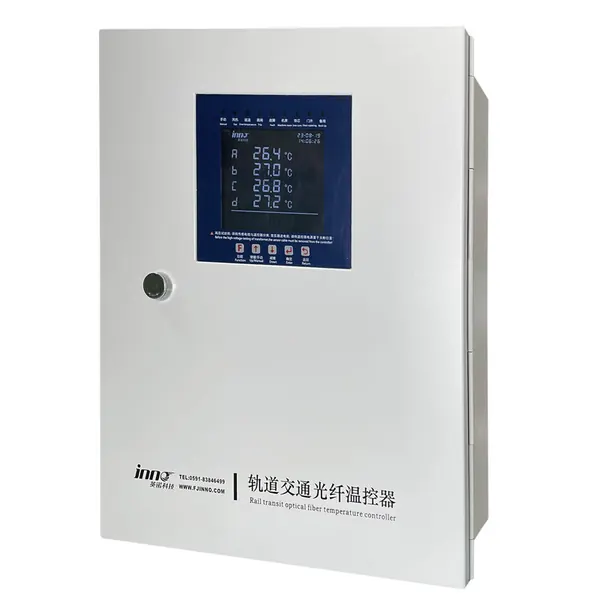
Transformer winding temperature monitoring configured for rail power and traction environments.
transformer fault monitoring system
A fixed threshold can alarm during normal loading and remain silent during a smaller but rapidly accelerating change. Too many nuisance alarms teach operators to ignore the system.
Early warning combines absolute value, rate of change, persistence, instrument status and selected companion signals. It separates a bad sensor, a normal operating excursion and a corroborated transformer concern.
Fault coverage is mapped to thermal, chemical, electrical, mechanical and oil-system symptoms. No sensor is described as universally detecting every transformer fault.
Early warning maps credible faults to observable symptoms and applies persistence, rate and cross-parameter rules. It separates device faults, operational excursions and corroborated transformer concerns.
| Event type | Example evidence | Expected response |
|---|---|---|
| Sensor fault | Open circuit, frozen value or failed self-test | Check measurement chain before asset action |
| Operational excursion | Temperature follows known load increase | Verify cooling and continued recovery |
| Persistent anomaly | One parameter remains outside baseline | Inspect context and obtain confirmation |
| Corroborated concern | Gas, temperature or discharge evidence agrees | Escalate under owner-approved procedure |
Field devices perform signal-specific processing, while an alarm layer combines timestamps, persistence and selected corroboration rules for operator presentation.
Early warning combines absolute value, rate of change, persistence, instrument status and selected companion signals. It separates a bad sensor, a normal operating excursion and a corroborated transformer concern.
A winding temperature rise during a load pickup may be normal. The same rise with a failed fan-current feedback and no temperature recovery after the cooling command should create a different, higher-priority response.
Give every alarm a delay, reset rule, owner and written action. Retain the values before and after the event so settings can be reviewed after a false or confirmed alarm.
The project team documents priority failure modes, observable symptoms, available sensors, acceptable false-alarm rate and confirmation pathway before setting thresholds.
Commissioning should prove each channel with a realistic input, confirm the channel name and units, simulate alarms and record the first usable baseline.
Every enabled alarm has severity, delay, reset behavior, owner and response instruction. Escalation depends on persistence, consequence and agreement with related indicators.
Operational alarms enter SCADA with concise tags; diagnostic context, waveforms and trends remain linked for engineering investigation.
Fits unattended sites and critical assets where the maintenance team needs fewer, better explained alarms rather than a larger number of thresholds.
Early warning indicates abnormal evidence, not guaranteed fault classification. Safe operating procedures and confirmatory inspection or testing remain essential.
Compare proposals line by line. Confirm the included sensors, cables, field equipment, software, drawings, commissioning work and communication interface instead of comparing only the monitoring host.
The final scope depends on transformer design and project objectives. It normally combines selected sensors, field acquisition, alarms, communications and an engineering response process.
Retrofit feasibility depends on sensor access and outage constraints. External measurements are usually easier to retrofit than winding sensors installed inside the active part.
Yes when the selected field equipment supports the required interface. The protocol, tag list, network responsibility and acceptance tests must be defined.
No. Online trends reduce information gaps, while offline tests, oil samples and inspections remain important confirmation tools.
Provide transformer drawings and ratings, installation stage, required measurements, communication architecture, alarm philosophy and project quantity.
Monitoring guidance is provided for project scoping. Final sensor placement, alarm settings, interfaces and diagnostic actions depend on transformer design and owner procedures.
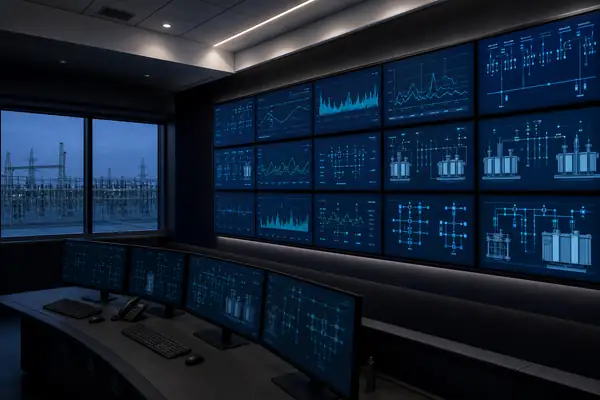
Share the transformer design, measurement points, installation stage and communication requirements. FUZHOUINNO will review a suitable product and monitoring configuration.